Singapore Hawker Food: Classic Dishes to Order on a First Visit
| Filed | Takes |
|---|---|
| 4 min read |
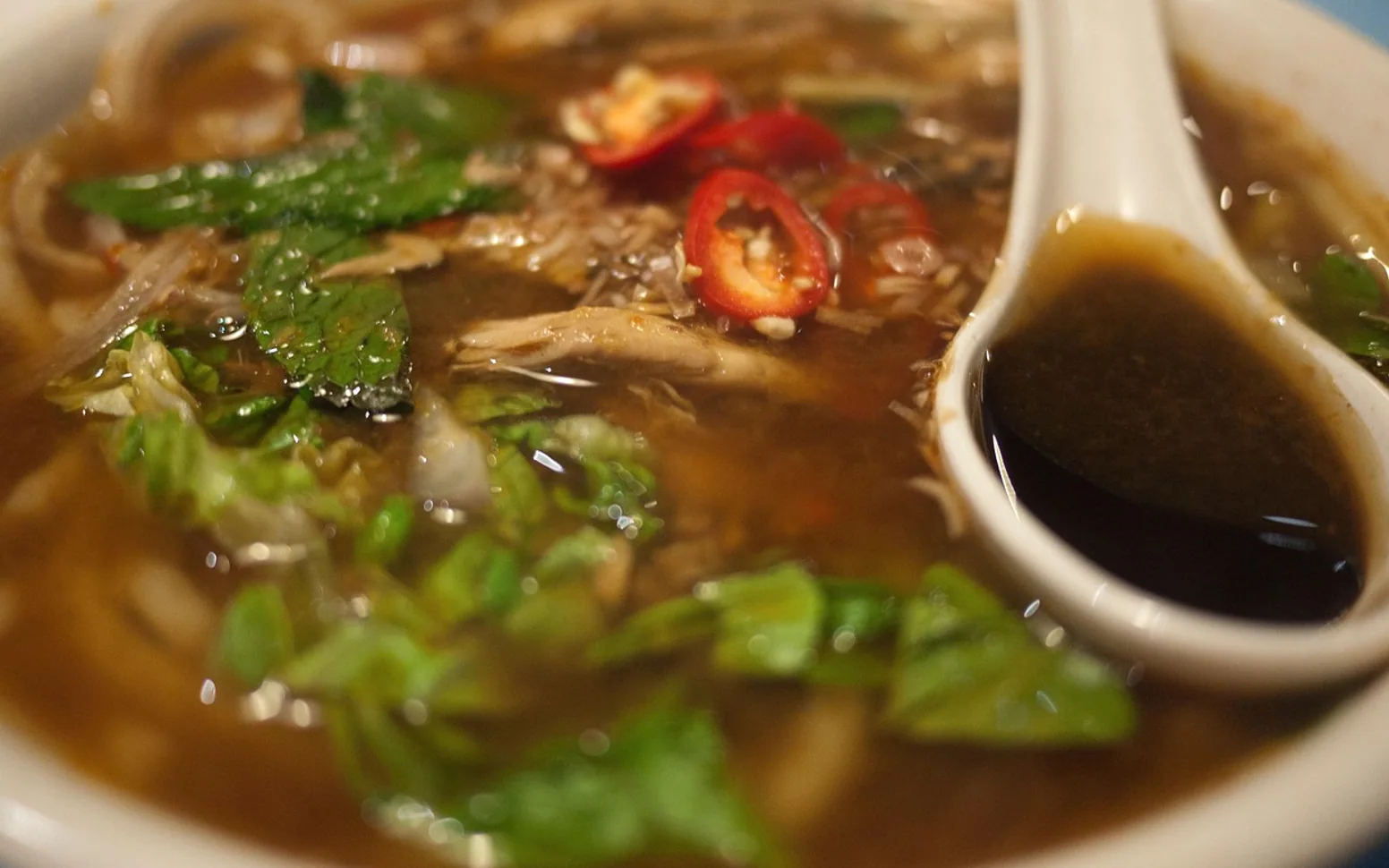
For a first taste of Singapore hawker food, start with Hainanese chicken rice, laksa, char kway teow, satay and fried carrot cake. Together they cover the Chinese, Malay, Indian and Peranakan influences that shape the city's cooking. After that, order at least one dish you have never heard of; the stalls with the longest queues of office workers are a good place to begin.
Rice dishes
Hainanese chicken rice
Often called the national dish. Poached or roasted chicken is served at room temperature over rice cooked in chicken stock with ginger, garlic and pandan. Three condiments come alongside: a bright chilli sauce, grated ginger and thick dark soy. The rice is as important as the bird; good stalls are judged on it.
Nasi lemak
A Malay favourite of rice steamed in coconut milk, served with sambal, crisp anchovies, peanuts, cucumber and an egg, then usually a piece of fried chicken or fish. It is eaten at any hour, including breakfast.
Mixed rice
Known locally as economy rice or cai fan, these stalls display a row of cooked dishes. You point at two or three to go on a plate of rice and pay according to what you chose. It is a gentle way to try vegetables and braises without committing to a full portion.
Noodles
- Laksa: rice noodles in a spicy, coconut-rich curry broth with prawns, fish cake and cockles. The Katong style cuts the noodles short so the bowl is eaten with a spoon alone.
- Char kway teow: flat rice noodles wok-fried with dark soy, egg, bean sprouts, Chinese sausage and often cockles. The smoky edge from a very hot wok is the point.
- Hokkien mee: yellow noodles and thin rice vermicelli braised in a rich prawn stock, finished with squid, prawns, a wedge of lime and sambal.
- Bak chor mee: springy noodles tossed with minced pork, vinegar and chilli, a sharper, tangier bowl than most visitors expect.
- Wanton mee: thin egg noodles with char siu and dumplings, served dry with sauce or in soup.
Grills, fried snacks and small plates
| Dish | What it is | Good to know |
|---|---|---|
| Satay | Skewers of chicken, mutton or beef grilled over charcoal | Served with peanut sauce, cucumber, onion and rice cakes |
| Carrot cake (chai tow kway) | Radish and rice-flour cake fried with egg | No carrot at all; "white" is plain, "black" adds sweet soy |
| Oyster omelette (orh luak) | Egg and starch batter fried with small oysters | Crisp edges, soft centre, chilli dip |
| Popiah | Fresh spring roll with braised turnip and egg | Not fried; light and good for sharing |
| Rojak | Fruit and vegetable salad in a dark shrimp-paste dressing | Sweet, sour and pungent; crushed peanuts on top |
Indian-Muslim stalls
Roti prata is a flaky griddle bread torn and dipped into curry; order it plain or with egg. Murtabak is its heavier cousin, stuffed with minced meat, egg and onion. Mee goreng, stir-fried yellow noodles with a tomato-chilli edge, makes a hearty lunch. Pair any of them with teh tarik, sweet milk tea poured back and forth until frothy.
Soups
Bak kut teh, pork ribs simmered in a peppery, garlicky broth, is a favourite on rainy days and late nights; refills of soup are often offered. Sliced fish soup, clear and mild with leafy greens, is one of the lightest meals in any centre.
Something sweet
- Chendol: shaved ice with coconut milk, green pandan jelly, red beans and palm sugar syrup.
- Ice kacang: a colourful mound of shaved ice over beans, jelly and sweet corn, drizzled with syrups.
- Sugar cane juice: pressed to order, often with a squeeze of lime.
A first-visit tasting plan for a group
- Secure a table first, then send everyone to a different stall.
- Aim for one rice dish, one noodle dish, one grill and one vegetable plate between three or four people.
- Order drinks last so they arrive cold.
- Finish with a shared dessert from the drinks or dessert stall.
The customs around seats, trays and ordering phrases are covered in our guide to hawker centre etiquette, which is worth a read before you go.
Dietary needs and spice
Halal stalls display their certification at the counter, and most centres have at least one vegetarian stall offering mock meats and vegetable dishes. If you are sensitive to chilli, ask for sambal on the side; stallholders are used to the request. Shellfish, peanuts and shrimp paste appear in many dishes, so anyone with an allergy should ask directly and, when in doubt, choose something simpler. Allergen labelling at small stalls is limited.
Fitting a meal into a day out
Many hawker centres sit close to neighbourhood temples, markets and parks, so a morning of sightseeing ends naturally with lunch. Combining a visit to the peaceful Lin San Temple with a nearby hawker meal makes an unhurried half day. For an altogether different style of eating in the region, our piece on omakase etiquette shows how a single chef's counter works.
When is the best time to go?
Mid-morning or mid-afternoon, outside the lunch rush. Some popular stalls sell out early, so a late lunch can mean fewer choices.
Do I need to speak the local terms?
No. Pointing at a picture on the signboard works perfectly, and English is widely understood.
What is new in each topic
Tell us what you think.
Suggestions help us plan.