Visiting a Buddhist Temple Respectfully: Dress, Behaviour and Small Courtesies
| Filed | Takes |
|---|---|
| 3 min read |
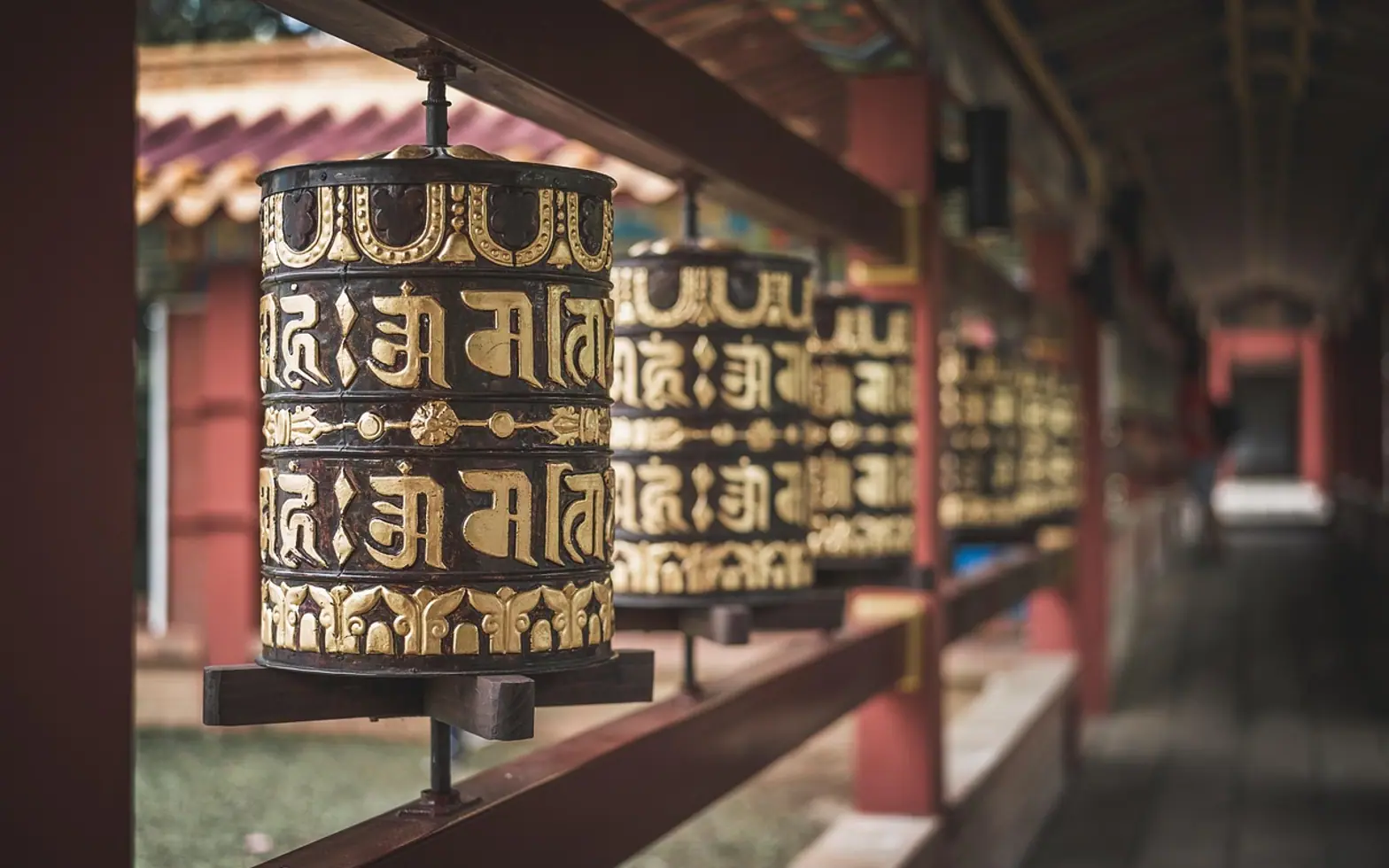
Buddhist temples are among the most rewarding places to visit on a trip through Asia and beyond. They can be grand complexes with sweeping roofs or quiet rooms tucked between shops. Whatever their size, they are active places of worship, where people come to pray, make offerings, remember family members and find a moment's calm. Visitors are generally welcome. A few courtesies, most of them common sense, show that you understand where you are.
Customs vary, so watch first
Buddhism is practised in many traditions, and temples in Thailand, Japan, Sri Lanka, Singapore or Korea each have their own habits. The simplest approach is to pause at the entrance and look at what others are doing. Signs at the gate often list the house rules, and volunteers or caretakers are usually happy to guide a polite visitor. When a custom seems puzzling, asking quietly is always better than guessing.
What to wear
- Cover shoulders and knees. This applies to everyone, not only women. A light scarf or shawl in your day bag solves the problem in seconds.
- Avoid see-through or very tight clothing and anything with slogans or images that could cause offence.
- Choose shoes that slip off easily. You may take them off and on several times in one visit.
- Remove hats and sunglasses when you enter the halls.
Some larger temples lend wraps or sarongs to visitors who arrive underdressed. Accept them gracefully; they are offered precisely so you can still come in.
Shoes and thresholds
In many temples shoes come off before entering a prayer hall, and sometimes before entering the grounds. Look for rows of footwear by the door and follow suit. Clean socks are a kindness on hot stone floors. In some traditions it is also customary to step over the raised threshold of a doorway rather than standing on it.
Behaviour inside
Quiet and calm
Lower your voice, silence your phone and move slowly. If a ceremony or chanting is under way, stand or sit quietly at the side, or come back later. Children are welcome in most temples; a brief chat beforehand about quiet voices and gentle walking helps everyone.
Feet, hands and statues
In several Buddhist cultures it is impolite to point the soles of your feet towards a Buddha image, a monk or another person. When sitting on the floor, kneel or tuck your feet to the side. Do not touch, climb on or pose in a disrespectful way with statues, and never turn your back to a Buddha image for a selfie, which many temples ask visitors to avoid.
Monks and nuns
Be respectful and give space. In some traditions monks do not touch or receive objects directly from women, so if you wish to offer something, place it nearby or hand it to a layperson. If unsure, simply smile and let them lead the interaction.
Photography
| Situation | Usual courtesy |
|---|---|
| Courtyards and exteriors | Generally fine, unless signs say otherwise |
| Inside prayer halls | Check signs; some forbid photos, others ask for no flash |
| People praying | Do not photograph them without permission |
| Ceremonies | Ask first, and keep a respectful distance |
Offerings and donations
Temples usually depend on donations for upkeep. A donation box near the entrance is common, and a modest contribution is a good way to say thank you for being welcomed. You may also see incense, flowers or candles for sale. Taking part is optional; if you do, watch how locals light and place them and do the same. Many temples also run small shops, vegetarian kitchens or community events, which are another gentle way to support them.
Leaving well
When you leave, collect your shoes without fuss, take any rubbish with you and, if you feel moved to, give a small bow or nod towards the main hall. If you would like to read about one temple in particular before you travel, our earlier piece on Lin San Temple in Singapore describes the atmosphere and role of a peaceful local sanctuary.
What is new in each topic
Tell us what you think.
Suggestions help us plan.